

Bone Marrow Transplant in India

Bone Marrow Transplant in India is an advanced treatment option for several blood cancers, blood disorders, immune-system disorders, and certain inherited conditions. Also known as hematopoietic stem cell transplantation (HSCT), the procedure replaces damaged or diseased blood-forming stem cells with healthy stem cells.
At MedIndia Tours, we help international patients explore suitable hospitals, transplant specialists, treatment options, medical opinions, travel arrangements, accommodation, and other aspects of medical travel in India.

What Is a Bone Marrow Transplant?

A bone marrow transplant is a medical procedure in which healthy blood-forming stem cells are infused into a patient after appropriate preparation. These stem cells can restore the body’s ability to produce healthy blood cells.

The cells used for transplantation may come from:

  • The patient’s own body — Autologous Transplant
  • A compatible donor — Allogeneic Transplant
  • A matched sibling donor
  • A matched unrelated donor
  • A partially matched or haploidentical donor
  • In selected situations, stem cells from umbilical cord blood

Modern transplant programmes may use bone marrow or peripheral blood stem cells depending on the patient’s condition and transplant plan. India’s national transfusion medicine guidance describes both marrow and peripheral blood stem-cell collection approaches.

Conditions Treated with Bone Marrow Transplant in India

Bone marrow transplantation may be recommended for selected patients with serious hematological and immune-related conditions. Common indications include:

Blood Cancers

  • Acute Myeloid Leukemia (AML)
  • Acute Lymphoblastic Leukemia (ALL)
  • Chronic Myeloid Leukemia (CML)
  • Myelodysplastic Syndromes (MDS)
  • Multiple Myeloma
  • Hodgkin Lymphoma
  • Non-Hodgkin Lymphoma

Non-Cancerous Blood Disorders

  • Aplastic Anemia
  • Thalassemia
  • Sickle Cell Disease
  • Certain inherited blood disorders
  • Selected immune-system disorders

AIIMS reports the use of autologous and allogeneic hematopoietic stem cell transplantation for conditions including aplastic anemia, thalassemia, myeloma, lymphoma, leukemia and myelodysplastic syndromes.
Types of Bone Marrow Transplant

The exact treatment pathway differs from patient to patient

1. Autologous Bone Marrow Transplant

In an autologous transplant, the patient’s own stem cells are collected and stored before intensive treatment. After conditioning therapy, the stored cells are returned to the patient.

This approach is commonly used for selected diseases such as multiple myeloma and certain lymphomas.

2. Allogeneic Bone Marrow Transplant

In an allogeneic transplant, stem cells are obtained from another person who is suitably matched with the patient.

Potential donors may include:

  • Matched sibling
  • Matched family member
  • Matched unrelated donor
  • Haploidentical donor

Allogeneic transplantation can be used for selected leukemias, aplastic anemia, thalassemia, myelodysplastic syndromes and other disorders.

3. Haploidentical Stem Cell Transplant

A haploidentical transplant uses a partially matched family donor. This approach can provide an option for patients who do not have a fully matched donor.

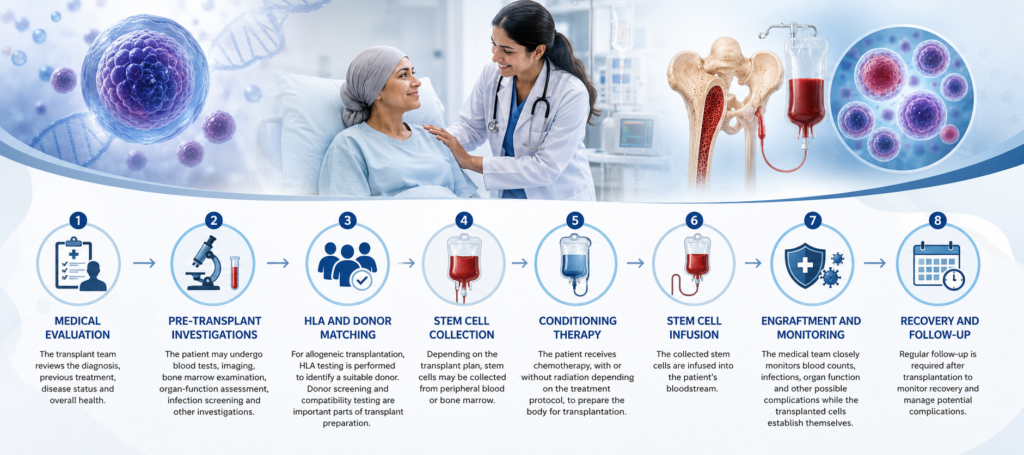
Bone Marrow Transplant Procedure in India

India has developed specialized hematology and bone marrow transplant centres

Frequently Asked Questions (FAQ's)

Bone marrow transplant is a type of hematopoietic stem cell transplant. Stem cells may be collected from bone marrow or peripheral blood depending on the treatment plan

There is no single success rate applicable to all patients. Outcomes depend on the disease, stage, patient age, general health, donor match, transplant type, disease response and other clinical factors.

No. An autologous transplant uses the patient’s own stem cells. An allogeneic transplant requires donor stem cells.

A potential donor must undergo medical evaluation and compatibility testing. Family members may be considered, while unrelated donor searches may also be performed when necessary.

The transplant itself involves an infusion of stem cells through a vein. However, patients may experience side effects from conditioning therapy and other parts of the treatment.

Yes, selected children with serious blood, immune or inherited disorders may be candidates for hematopoietic stem cell transplantation. Pediatric suitability must be evaluated by a specialized transplant team.


Yes. International patients can seek evaluation and treatment at Indian transplant centres, subject to medical assessment, hospital acceptance and applicable travel/visa requirements

MedIndia Tours facilitates medical travel and helps patients connect with healthcare providers. Medical diagnosis, treatment decisions and transplant procedures are performed by qualified medical professionals at the selected hospital.

Scroll to Top