
Stem Cell Therapy for AVN in India

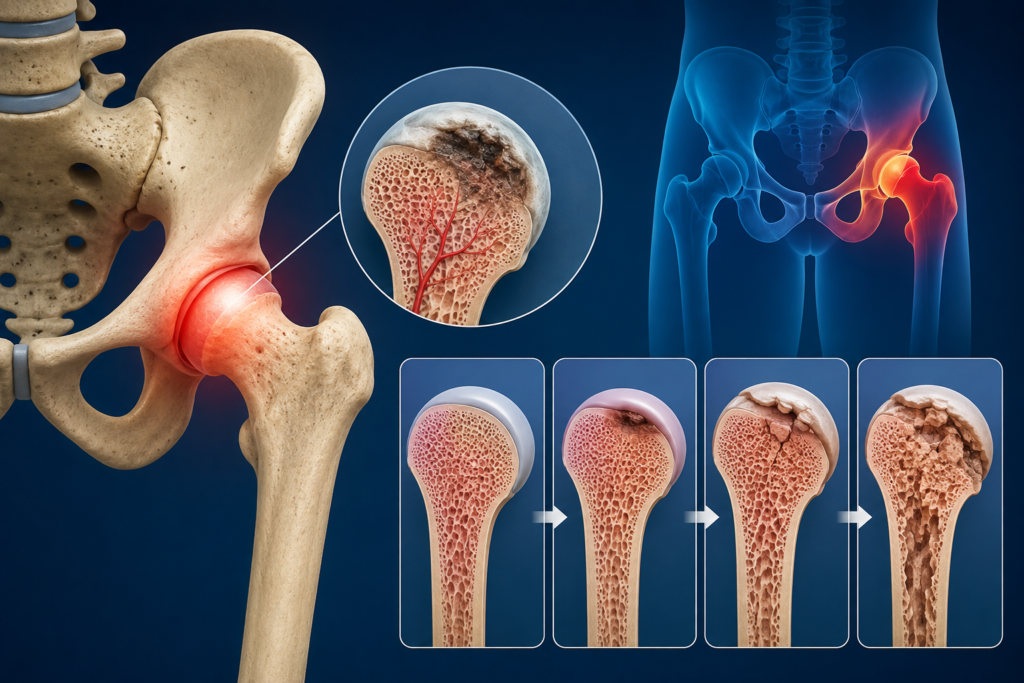
Avascular Necrosis (AVN), also known as osteonecrosis, is a condition caused by reduced blood supply to the bone. It most commonly affects the femoral head and can progressively damage the hip joint. Early diagnosis is important because advanced AVN may lead to femoral-head collapse and eventually require hip replacement.
Stem cell therapy for AVN in India is an area of regenerative-medicine research, particularly for early-stage, pre-collapse disease. Bone-marrow-derived cells have been studied for their potential to support bone repair and vascularization and may be investigated alongside established procedures such as core decompression.

What Is AVN?

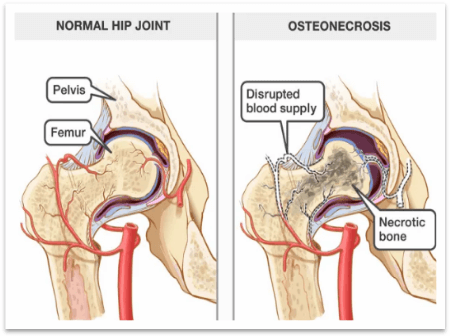
Avascular Necrosis (AVN), also known as osteonecrosis, is a condition in which reduced blood supply causes damage and death of bone tissue. The femoral head of the hip is one of the most commonly affected areas.
When AVN progresses, the weakened bone can lose its structural strength and the femoral head may eventually collapse. Advanced disease can cause severe pain, restricted movement and hip-joint damage, sometimes resulting in the need for total hip replacement.
Early diagnosis and appropriate treatment are important for patients with AVN.


Avascular Necrosis

Efficacy of stem cell therapy for avascular necrosis of the femoral head

Stem cell therapy for AVN in India is an area of regenerative-medicine research being investigated for its potential to support bone preservation and repair, particularly in patients with early-stage or pre-collapse avascular necrosis.
Bone-marrow-derived stem/stromal cells have been studied because of their potential role in tissue repair, angiogenesis and bone regeneration. Clinical studies have investigated their use alone as well as in combination with procedures such as core decompression and bone grafting.

How Does Stem Cell Therapy Work for AVN?

The objective of regenerative approaches is to support the body’s natural repair mechanisms in the area affected by AVN.
Depending on the treatment protocol, cells may be obtained from the patient’s own bone marrow and processed according to the applicable clinical and regulatory requirements.

Potential mechanisms being investigated include:

  • Supporting bone regeneration
  • Supporting formation of new blood vessels
  • Improving the biological environment of damaged bone
  • Supporting tissue repair
  • Potentially slowing progression of early-stage AVN
  • Supporting hip-joint preservation

The response to treatment can vary considerably between patients.

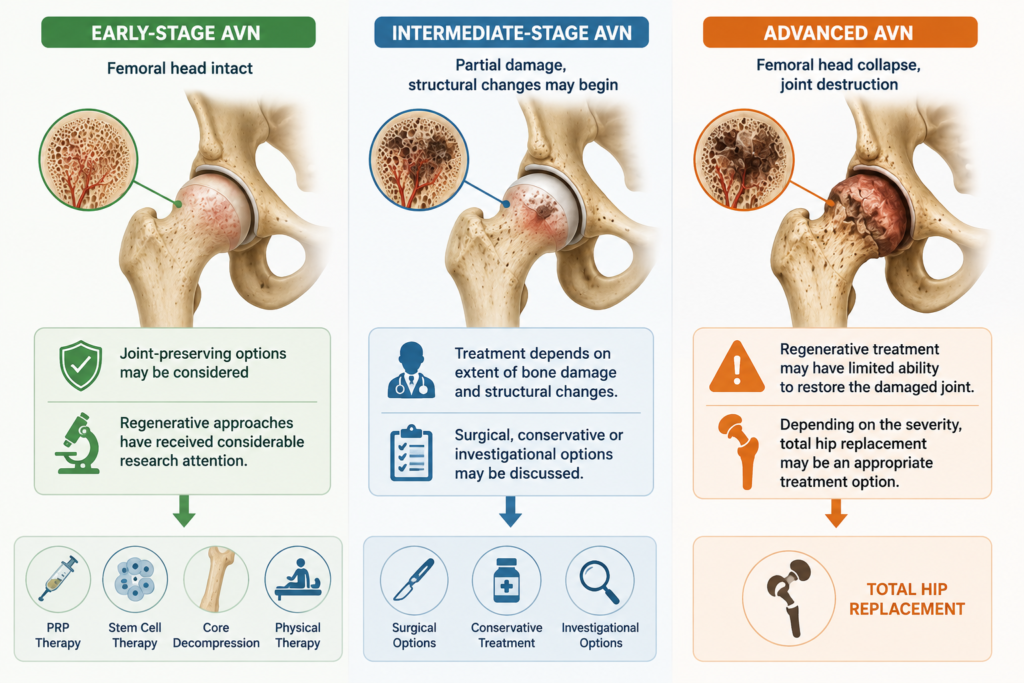
Early-Stage AVN

When the femoral head has not collapsed, joint-preserving treatment options may be considered depending on the patient’s individual condition.

This is the stage in which regenerative approaches have received considerable research attention.


Stages of AVN and Treatment Considerations

Advanced AVN

Once significant femoral-head collapse and joint destruction have occurred, regenerative treatment may have limited ability to restore the damaged joint. Depending on the severity, total hip replacement may become an appropriate treatment option.

Stem Cell Therapy for AVN for International Patients

Patients travelling to India for medical treatment should share their medical records before travelling whenever possible.

Useful documents include:

  • Recent MRI reports and images
  • X-ray reports
  • Previous treatment records
  • Medication history
  • Previous surgical reports
  • Relevant blood-test reports
  • Details of the suspected cause of AVN

A remote medical review can help determine whether an in-person consultation is appropriate.


Recovery After AVN Treatment

Recovery depends on the treatment performed, the stage of AVN and whether stem-cell treatment is combined with an orthopedic procedure.

The treating team may recommend:

  • Temporary weight-bearing restrictions
  • Physiotherapy
  • Gradual return to normal activity
  • Follow-up clinical examinations
  • Follow-up MRI or X-rays when appropriate
  • Regular monitoring of hip function

Patients should follow their treating specialist’s rehabilitation instructions rather than assuming that recovery is the same for every stem-cell procedure.

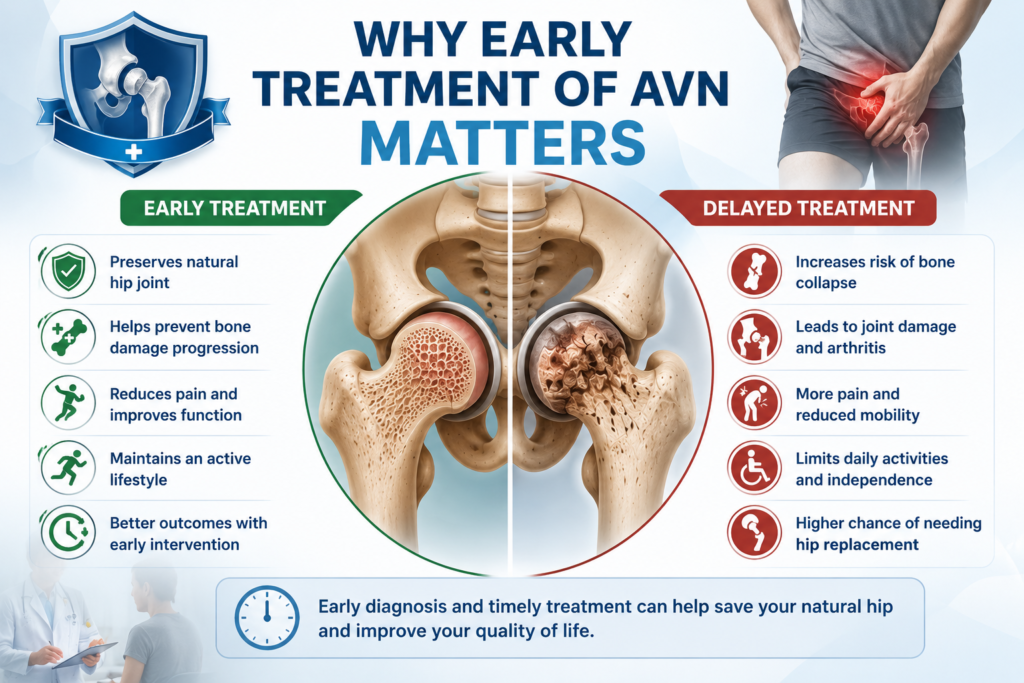
Why Early Treatment of AVN Matters

AVN can progressively damage the femoral head. Once substantial collapse has occurred, preserving the natural hip becomes more difficult.

Early evaluation can help determine whether the patient may be suitable for joint-preserving approaches or whether another treatment is more appropriate.

If you have persistent hip pain, difficulty walking, restricted hip movement or known risk factors for AVN, an orthopedic evaluation and appropriate imaging can help determine the stage of disease.

Frequently Asked Questions (FAQ's)

Early-stage, pre-collapse AVN is the main setting in which cell-based regenerative approaches have been studied. However, suitability must be determined by an orthopedic specialist.

Advanced AVN may require established orthopedic treatment. Depending on the extent of collapse and joint damage, total hip replacement may be considered.

AVN is evaluated using clinical examination and imaging, particularly X-rays and MRI. MRI can help identify early disease and assess the extent of bone involvement.


Common risk factors include long-term corticosteroid use, excessive alcohol consumption, fractures or dislocation and other medical conditions. In some patients, no definite cause is identified.

Core decompression is a joint-preserving orthopedic procedure used primarily for selected patients with early-stage AVN. It involves creating channels within the affected bone to reduce pressure and support healing. In research settings, cell-based treatment may be added to the procedure.

Depending on the patient’s condition, the treating team may request:

  • MRI of the hip
  • X-rays
  • Blood investigations
  • Medical history
  • Medication history
  • Assessment of AVN stage
  • Evaluation of underlying risk factors
  • General health assessment

AVN can have several causes and risk factors. These may include prolonged corticosteroid exposure, excessive alcohol consumption, trauma to the hip, certain medical conditions and previous treatments. In some patients, the cause remains unknown.

Recovery varies according to the patient’s disease stage and the procedure performed. Patients may require temporary weight-bearing restrictions, physiotherapy and follow-up imaging. Recovery should be individualized by the treating orthopedic team.

Scroll to Top