

Kidney Transplant in India
Kidney transplant in India offers eligible patients with advanced kidney disease access to experienced nephrologists, transplant surgeons, specialised hospitals and comprehensive post-transplant care. India has established kidney transplant programmes that provide recipient evaluation, donor assessment, transplant surgery, intensive monitoring and long-term follow-up.
MedIndia Tours helps domestic and international patients connect with suitable transplant hospitals and specialists. We assist with medical-record reviews, consultations, hospital options, treatment planning, travel coordination and follow-up arrangements.
What Is a Kidney Transplant?
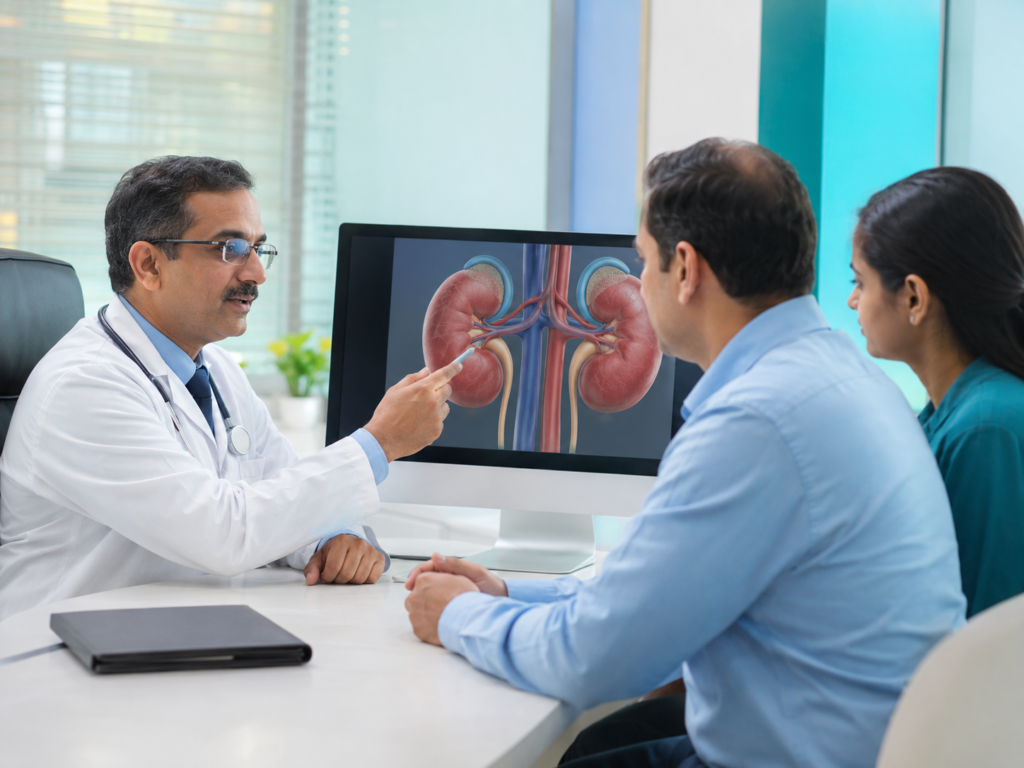
A kidney transplant, also called a renal transplant, is surgery in which a healthy donor kidney is placed into a person whose kidneys can no longer adequately filter waste and excess fluid from the blood. The patient’s own kidneys are usually left in place unless they are causing a specific medical problem.
A transplant may offer eligible patients greater freedom from dialysis and improved day-to-day functioning. However, it is major surgery and requires lifelong specialist follow-up and anti-rejection medicines.
- Comprehensive recipient and donor evaluation
- Blood-group, tissue and compatibility testing
- Transplant surgery in an authorised hospital
- Lifelong medicines, tests and follow-up care
Who May Need a Kidney Transplant?
A transplant team may consider kidney transplantation for a person with advanced chronic kidney disease or kidney failure when the expected benefits outweigh the risks. Individual suitability depends on the patient’s overall health, cause of kidney failure and ability to follow long-term treatment.
Advanced Kidney Failure
Very low kidney function with symptoms, complications or a need for renal replacement therapy.
Patients on Dialysis
Some medically eligible patients receiving haemodialysis or peritoneal dialysis may be evaluated.
Patients on Dialysis
Some medically eligible patients receiving haemodialysis or peritoneal dialysis may be evaluated.
Who May Need a Kidney Transplant?
A transplant may be considered for people with advanced chronic kidney disease or end-stage kidney failure.
Common causes of kidney failure include:
- Diabetes
- High blood pressure
- Polycystic kidney disease
- Chronic glomerulonephritis
- Congenital kidney disorders
- Autoimmune diseases
- Recurrent kidney infections
- Obstructive urinary conditions
- Inherited kidney diseases
- Kidney damage caused by certain medicines or medical conditions
Not every person with kidney failure is suitable for transplantation. The transplant team evaluates the patient’s overall health, disease status, infection risk and ability to follow lifelong treatment.

In a living-donor transplant, a healthy and medically suitable person donates one kidney to the recipient.
The donor must undergo comprehensive medical, psychological and legal evaluation. The process must comply with India’s organ-transplant regulations.
A deceased-donor transplant uses a kidney donated after a person’s death. Eligible patients are registered through the applicable official organ-allocation system.
Waiting time and organ availability depend on allocation rules, medical priority, compatibility and availability. A deceased-donor kidney cannot be guaranteed.
A swap or paired kidney transplant may be considered when a willing donor is medically suitable but incompatible with the intended recipient.
Two incompatible donor-recipient pairs may exchange donors when the transplant teams establish suitable compatibility. Such transplantation requires medical assessment and applicable legal approval.
Compatibility Tests Before Kidney Transplant
Compatibility testing helps determine whether the recipient’s immune system is likely to accept the donor kidney.
Important tests may include:
Blood-Group Testing
The donor and recipient blood groups are assessed for compatibility.
HLA or Tissue Typing
Human leukocyte antigen testing evaluates certain genetic markers involved in immune compatibility.
Antibody Screening
The recipient is tested for antibodies that may react against donor tissue.
Crossmatch Testing
The recipient’s blood is tested against donor cells. A favourable crossmatch result is generally required before transplantation.
The transplant team may recommend additional tests according to the individual case.
Potential benefits for an appropriately selected patient may include:
- Reduced or eliminated need for regular dialysis
- Better energy and physical functioning
- Greater dietary and fluid flexibility
- Improved ability to work or travel
- Improved quality of life
- Better management of some complications of kidney failure
Results differ between patients. A successful outcome cannot be guaranteed.
Kidney transplantation is major surgery and may involve risks such as:
- Bleeding
- Blood clots
- Infection
- Surgical-wound complications
- Urinary leakage or obstruction
- Delayed kidney function
- Rejection of the transplanted kidney
- Failure of the transplanted kidney
- Side effects from anti-rejection medicines
- Recurrence of the original kidney disease
- Need for additional procedures or dialysis
The transplant team explains the patient-specific benefits and risks before surgery.
Recovery time varies according to the patient’s health, transplant type, kidney function and postoperative progress.
During Hospital Recovery
The medical team monitors kidney function, urine production, medication levels, wound healing and possible complications.
First Few Weeks
Patients usually require frequent blood tests and follow-up consultations. Physical activity is increased gradually according to the transplant team’s advice.
Long-Term Recovery
Long-term care may include:
- Lifelong anti-rejection medicines
- Regular kidney-function tests
- Blood-pressure monitoring
- Diabetes management
- Infection precautions
- Balanced nutrition
- Adequate hydration
- Weight management
- Avoiding smoking and tobacco
- Regular exercise after medical clearance
Patients should immediately contact their transplant centre if they develop fever, reduced urine output, worsening pain, swelling, breathing difficulty, vomiting, wound drainage or significant weakness.
Why Choose India for Kidney Transplant?
International patients may consider India because of:
- Experienced nephrologists and transplant surgeons
- Established transplant hospitals
- Advanced diagnostic laboratories
- Modern operating theatres and ICUs
- Multidisciplinary transplant teams
- Structured postoperative monitoring
- Availability of medical-travel support
- Comparatively affordable treatment options
The final hospital and treatment plan should be selected according to medical requirements, legal eligibility and specialist recommendations.
How MedIndia Tours Can Help
MedIndia Tours provides non-clinical medical travel and treatment-coordination support.
Our assistance may include:
- Initial medical-record collection
- Specialist opinion coordination
- Suitable hospital options
- Appointment scheduling
- Provisional treatment estimates
- Guidance regarding requested documents
- Medical-visa support documents where available
- Airport-transfer coordination
- Accommodation assistance
- Local travel support
- Interpreter coordination
- Hospital communication
- Discharge and follow-up coordination
Diagnosis, donor approval, treatment selection and surgical decisions are made exclusively by qualified doctors, authorised hospitals and applicable regulatory authorities.
A successful transplant may replace much of the lost kidney function, but it is considered a treatment rather than a guaranteed cure. Lifelong medicines and monitoring remain necessary.
Many carefully selected living donors continue to live healthy lives with one kidney. Donation is still major surgery and requires comprehensive evaluation and long-term health monitoring.
A medically suitable donor may donate through an eligible legal pathway. Near-relative, non-near-relative and swap donations have different documentation and approval requirements.
International patients may be considered, subject to medical suitability, donor evaluation, relationship verification, hospital policy, immigration requirements and applicable legal approval.
No. MedIndia Tours does not arrange or source organ donors. Commercial organ trading is illegal. The patient must follow lawful donation and transplant procedures through an authorised hospital.
Many transplanted kidneys begin functioning soon after surgery. However, some kidneys take longer, and temporary dialysis may be required.
The timeline depends on recipient and donor testing, compatibility, document verification, legal approval, hospital scheduling and recovery. A fixed duration cannot be guaranteed before evaluation.
Patients may initially share recent kidney-function tests, dialysis records, blood-group reports, imaging, medical history, medicine list and available donor information
