
Orthopedic Treatment in India

Orthopedic treatment in India provides comprehensive care for conditions affecting the bones, joints, muscles, ligaments, tendons, and spine. From non-surgical therapies and minimally invasive procedures to complex joint replacement and spine surgery, Indian orthopedic hospitals offer treatment supported by modern diagnostic facilities, experienced specialists, advanced operating theatres, and structured rehabilitation programs.
MedIndia Tours helps international patients connect with suitable orthopedic specialists and hospitals in India while coordinating medical opinions, treatment planning, appointments, travel assistance, hospital admission, and follow-up care.

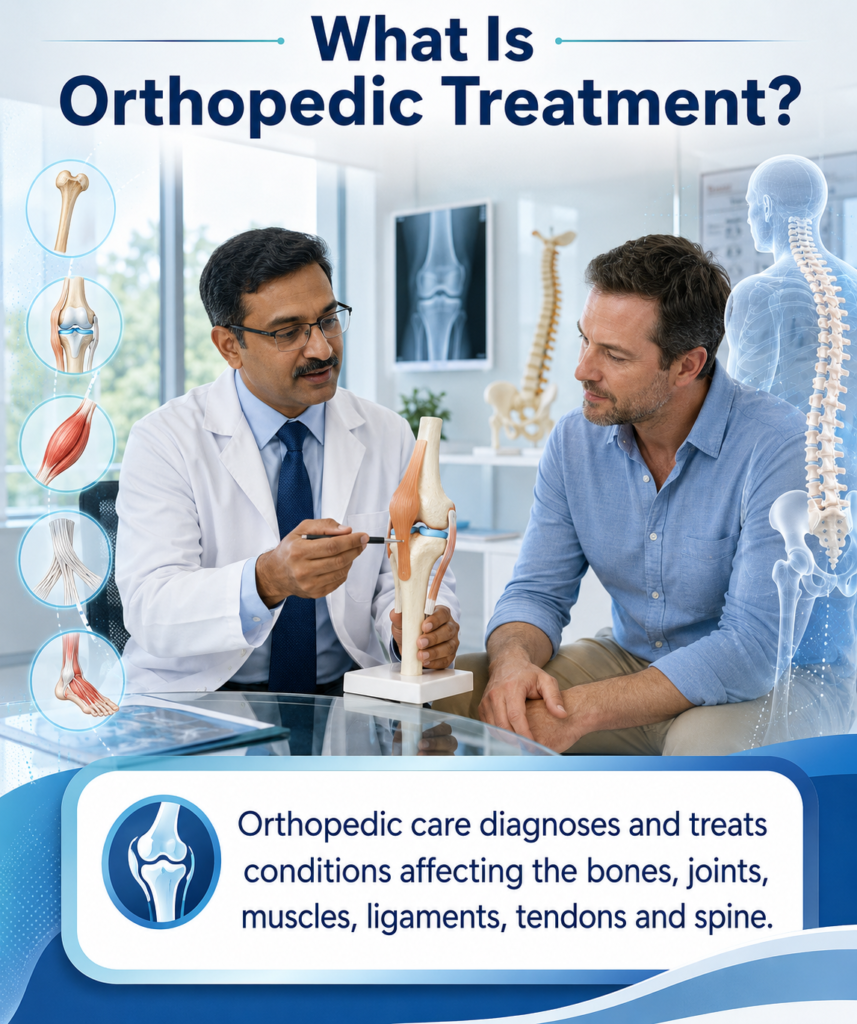
What Is Orthopedic Treatment?

Orthopedics is the branch of medicine concerned with diagnosing, treating, and preventing disorders of the musculoskeletal system. These disorders may result from ageing, arthritis, injuries, congenital conditions, infections, sports-related damage, or degenerative diseases.

Musculoskeletal conditions commonly cause pain, stiffness, weakness, and restricted movement, which can affect a person’s independence and quality of life. According to the World Health Organization, these conditions affect the joints, bones, muscles, spine, and surrounding connective tissues.
WHO: Musculoskeletal Health

Treatment may include medication, physiotherapy, lifestyle modification, injections, assistive devices, minimally invasive procedures, or surgery, depending on the diagnosis and severity.

Orthopedic Conditions Treated in India

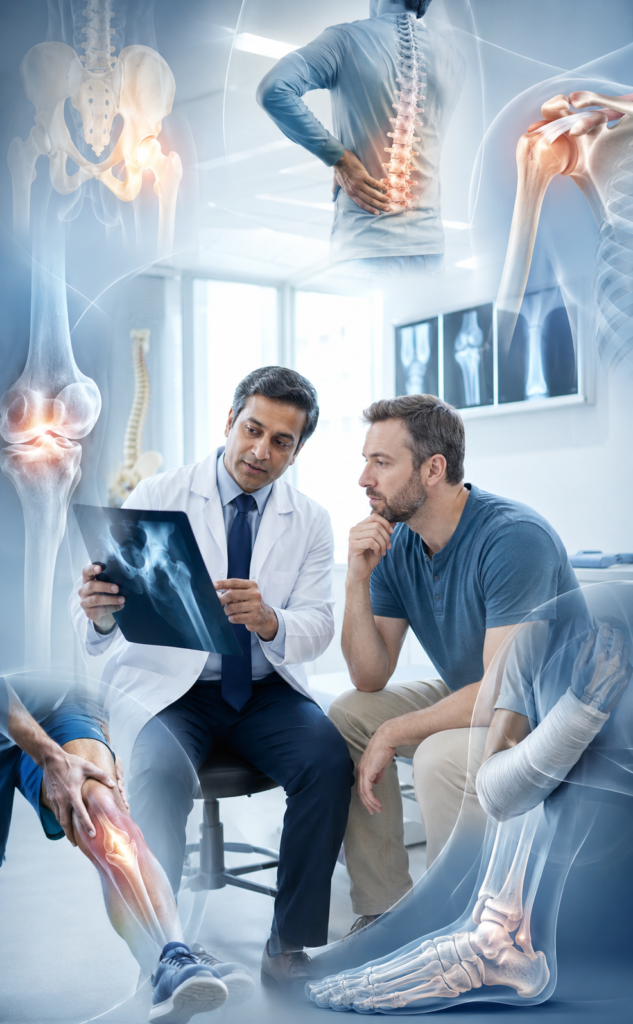
Orthopedic specialists in India evaluate and treat a wide range of conditions, including:

  • Osteoarthritis and rheumatoid arthritis
  • Knee and hip joint degeneration
  • Chronic knee, hip, shoulder, or back pain
  • Slipped disc and spinal disc disorders
  • Spinal stenosis
  • Scoliosis and spinal deformities
  • Fractures and complex trauma
  • Sports injuries
  • Ligament and tendon injuries
  • Meniscus tears
  • Rotator cuff injuries
  • Avascular necrosis of the hip
  • Osteoporosis-related fractures
  • Congenital bone and joint disorders
  • Bone and joint infections
  • Hand, wrist, foot, and ankle conditions
  • Bone tumours
  • Failed or worn-out joint implants
  • Limb deformities and unequal limb length
Types of Knee Replacement Surgery

Knee Replacement Surgery

  •  Total knee replacement
  • Partial knee replacement
  • Bilateral knee replacement
  • Revision knee replacement
  • Computer-assisted knee replacement
  • Robotic-assisted knee replacement

Hip Replacement Surgery

  • Total hip replacement
  • Partial hip replacement
  • Bilateral hip replacement
  • Revision hip replacement
  • Hip resurfacing in selected patients


Arthroscopic Surgery

  • Knee arthroscopy
  • Shoulder arthroscopy
  • Hip arthroscopy
  • Meniscus repair
  • ACL and PCL reconstruction
  • Rotator cuff repair
  • Treatment of recurrent shoulder dislocation


Spine Surgery

  • Lumbar discectomy
  • Laminectomy and decompression
  • Spinal fusion
  • Cervical spine surgery
  • Disc replacement
  • Minimally invasive spine surgery
  • Scoliosis correction
  • Kyphosis correction
  • Vertebroplasty and kyphoplasty
  • Surgery for spinal fractures
  • Revision spine surgery


Shoulder and Elbow Surgery

  • Frozen shoulder
  • Shoulder arthritis
  • Rotator cuff tears
  • Recurrent shoulder dislocation
  • Tennis elbow
  • Elbow stiffness
  • Shoulder or elbow fractures

Hand, Wrist, Foot and Ankle Surgery

  • Carpal tunnel syndrome
  • Trigger finger
  • Tendon injuries
  • Hand and wrist fractures
  • Bunions
  • Flat feet
  • Ankle instability
  • Achilles tendon injuries
  • Foot and ankle arthritis


Non-Surgical Orthopedic Treatment

Surgery is not required for every orthopedic condition. Depending on the diagnosis, specialists may recommend:

  • Pain and anti-inflammatory medication
  • Physiotherapy
  • Muscle-strengthening exercises
  • Weight-management support
  • Activity modification
  • Braces, splints, or walking aids
  • Joint injections
  • Occupational therapy
  • Rehabilitation
  • Lifestyle and ergonomic guidance

The treatment plan should be based on clinical examination, imaging results, symptom severity, medical history, and the effect of the condition on daily activities.


Advanced Orthopedic Technology in India

Selected orthopedic hospitals in India may provide:

  • Robotic-assisted joint replacement
  • Computer navigation
  • Minimally invasive surgical techniques
  • High-resolution MRI and CT imaging
  • Digital X-ray systems
  • Advanced arthroscopy equipment
  • Intraoperative imaging
  • Modern joint implants
  • Modular operation theatres
  • Dedicated orthopedic rehabilitation units

Availability varies by hospital, procedure, surgeon, and patient requirements.

Recovery After Orthopedic Surgery

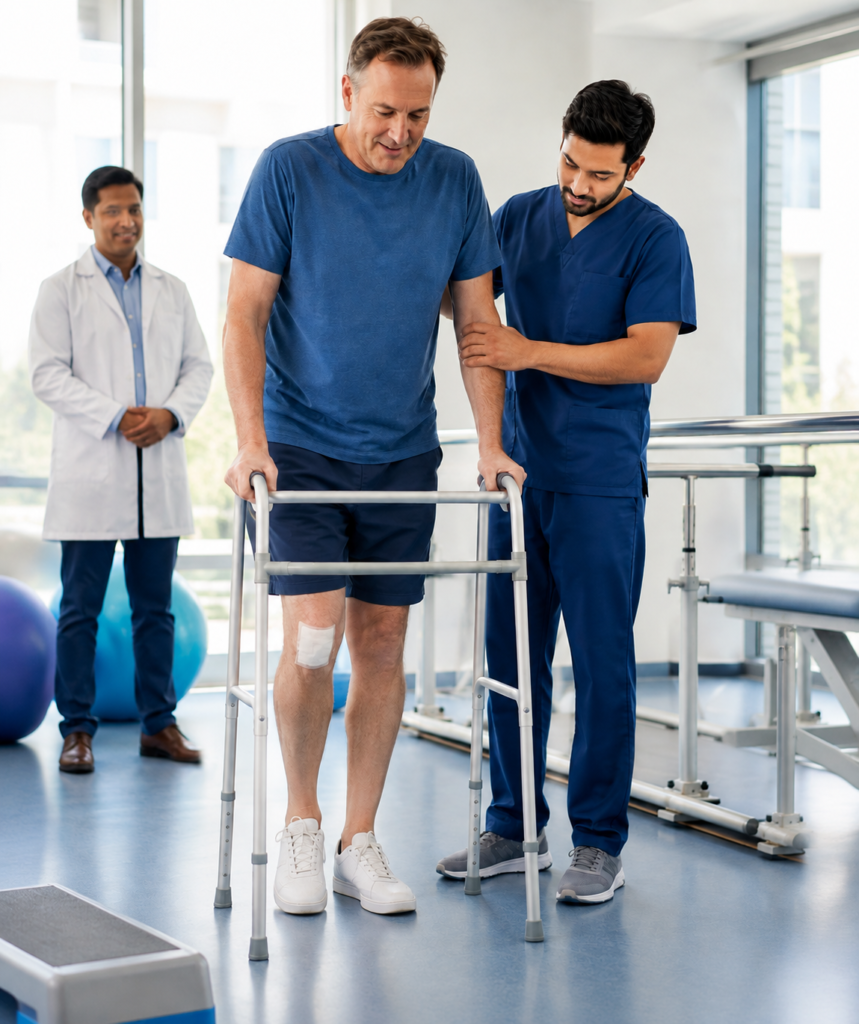
Recovery varies according to the procedure, age, general health, diagnosis, and individual response to treatment. A typical recovery program may include:

  • Pain and swelling management
  • Wound care
  • Prevention of blood clots
  • Early assisted movement when medically appropriate
  • Physiotherapy and mobility exercises
  • Use of a walker, crutches, brace, or other support
  • Nutritional guidance
  • Follow-up imaging or clinical reviews
  • Gradual return to routine activities

Patients should follow the surgeon’s instructions and avoid increasing activity without medical guidance. Planning for rehabilitation before joint surgery can help patients prepare for the physical and practical demands of recovery.

Why Choose MedIndia Tours?

MedIndia Tours assists international patients throughout their medical journey in India.

Our support services include:

  • Review of medical reports
  • Coordination with orthopedic specialists
  • Hospital and treatment-plan comparison
  • Appointment scheduling
  • Estimated treatment-cost coordination
  • Medical visa guidance
  • Airport transfer assistance
  • Accommodation support
  • Language assistance
  • Hospital admission coordination
  • Discharge and follow-up assistance

MedIndia Tours acts as a medical travel facilitator. Treatment decisions are made by qualified healthcare professionals after proper evaluation.

Frequently Asked Questions (FAQ's)

India offers joint replacement, arthroscopy, spine surgery, fracture fixation, sports injury treatment, pediatric orthopedics, limb reconstruction, and non-surgical rehabilitation

Surgery may be considered when pain, instability, deformity, nerve compression, or reduced mobility remains severe despite appropriate non-surgical treatment. A specialist must review the clinical findings and imaging before recommending surgery.

Yes, selected hospitals offer robotic-assisted knee and hip replacement. However, suitability depends on the patient’s condition, surgeon’s assessment, and availability of the required system.

The cost depends on the condition, procedure, hospital, surgeon, room category, implant selection, investigations, hospital stay, and rehabilitation requirements. A personalized estimate can be prepared after reviewing the medical records.

Many patients begin assisted movement under professional supervision relatively early after surgery, but timing varies. The surgeon and physiotherapist determine when standing and walking are safe.

Physiotherapy is an important part of recovery after many orthopedic procedures. It may help restore movement, strength, balance, and functional independence.

Yes. Patients can share their reports and imaging for review by an appropriate orthopedic specialist before planning their journey. A final diagnosis and treatment recommendation may require an in-person examination.

No medical procedure can guarantee a specific result. Outcomes depend on the diagnosis, severity, overall health, surgical factors, rehabilitation, and adherence to medical advice.

Scroll to Top