

Spinal Cord Injury Treatment in India

Spinal cord injury treatment in India combines specialist neurological care, spine surgery, intensive rehabilitation, pain management, and assistive technology. MedIndia Tours helps international patients connect with experienced spine surgeons and rehabilitation specialists while coordinating medical opinions, hospital appointments, travel, accommodation, and follow-up care.

What Is a Spinal Cord Injury?

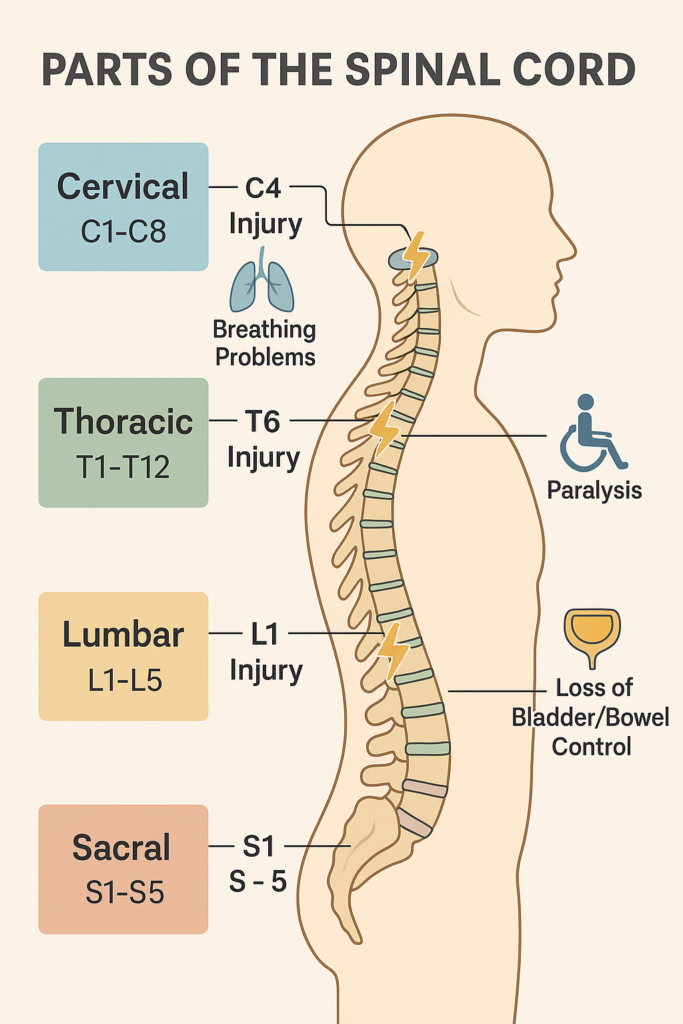
A spinal cord injury (SCI) occurs when trauma or disease damages the spinal cord and interrupts communication between the brain and the body. Depending on the location and severity of the damage, a person may experience weakness, loss of sensation, difficulty walking, paralysis, or changes in bladder, bowel, breathing, and sexual function.

The World Health Organization estimates that more than 15 million people worldwide live with spinal cord injury. The functional impact depends on the neurological level and whether the injury is complete or incomplete.

Causes of Spinal Cord Injury

Spinal cord injuries may be traumatic or non-traumatic

Types of Spinal Cord Injury

Complete spinal cord injury

A complete injury causes loss of motor and sensory function below the neurological level of injury. Recovery varies, but complete injuries generally have a more limited neurological recovery potential.

Incomplete spinal cord injury

In an incomplete injury, some sensation or movement remains below the affected level. The degree of recovery depends on the location and extent of the damage, the patient’s overall health, and how quickly appropriate treatment and rehabilitation begin.


Paraplegia

Paraplegia usually affects the trunk, legs, and pelvic organs while arm function remains preserved.


Tetraplegia or quadriplegia

Tetraplegia results from an injury to the cervical spinal cord and may affect the arms, hands, trunk, legs, and pelvic organs. Higher cervical injuries can also affect breathing.


Symptoms of Spinal Cord Injury

Symptoms vary according to the injury level and severity. They may include:

  • Weakness or paralysis
  • Loss of movement or coordination
  • Numbness, tingling, or altered sensation
  • Neck or back pain
  • Muscle stiffness or spasms
  • Loss of bladder or bowel control
  • Breathing difficulties
  • Changes in sexual function
  • Difficulty maintaining blood pressure or body temperature
  • Problems with balance, standing, or walking

A suspected spinal cord injury is a medical emergency. The person should not be moved unnecessarily and requires immediate emergency evaluation.

Spinal Cord Injury Rehabilitation in India

Rehabilitation is one of the most important parts of spinal cord injury care. Its purpose is to maximise remaining function, prevent complications, and improve independence and quality of life.

A comprehensive programme may include:

  • Physiotherapy
  • Occupational therapy
  • Gait and balance training
  • Strength and flexibility exercises
  • Respiratory therapy
  • Bladder and bowel training
  • Speech or swallowing therapy when required
  • Pain and spasticity management
  • Wheelchair and mobility training
  • Psychological counselling
  • Nutrition support
  • Family and caregiver education
  • Home modification guidance

Rehabilitation can improve functional abilities even when complete neurological recovery is not possible.

There is currently no established cure that can reliably reverse every spinal cord injury. Surgery, rehabilitation, medication, and assistive technology may improve function, comfort, independence, and quality of life.

Walking recovery depends mainly on the neurological level and whether the injury is complete or incomplete. Some patients with incomplete injuries regain meaningful movement, but results cannot be guaranteed.

No. Surgery may be recommended when there is spinal instability, compression, fracture, deformity, or another treatable structural problem. Other patients may primarily require medical management and rehabilitation.

Stem cell therapy for spinal cord injury remains experimental in many settings. Patients should obtain an independent specialist opinion and verify regulatory approval and clinical evidence before proceeding.

Yes. Medical records can be reviewed remotely before travel. A final diagnosis and treatment plan may require an in-person examination and additional investigations.


If you or your family member is looking for spinal cord injury treatment in India, share the latest medical reports with MedIndia Tours. Our team can coordinate a specialist opinion, hospital selection, estimated treatment cost, travel assistance, and rehabilitation planning.


Treatment may involve a neurosurgeon, orthopaedic spine surgeon, neurologist, rehabilitation physician, physiotherapist, occupational therapist, pain specialist, urologist, psychologist, and rehabilitation nurse.

MedIndia Tours can coordinate medical-record review, specialist opinions, hospital selection, estimated costs, appointment scheduling, medical visa documentation, airport pickup, accommodation, and follow-up consultations.

Scroll to Top